A Mathematician Says He and an AI Proved the Riemann Hypothesis
The claim about math's most famous unsolved problem has not been fully verified; some independent mathematicians told Scientific American it is almost certainly correct.
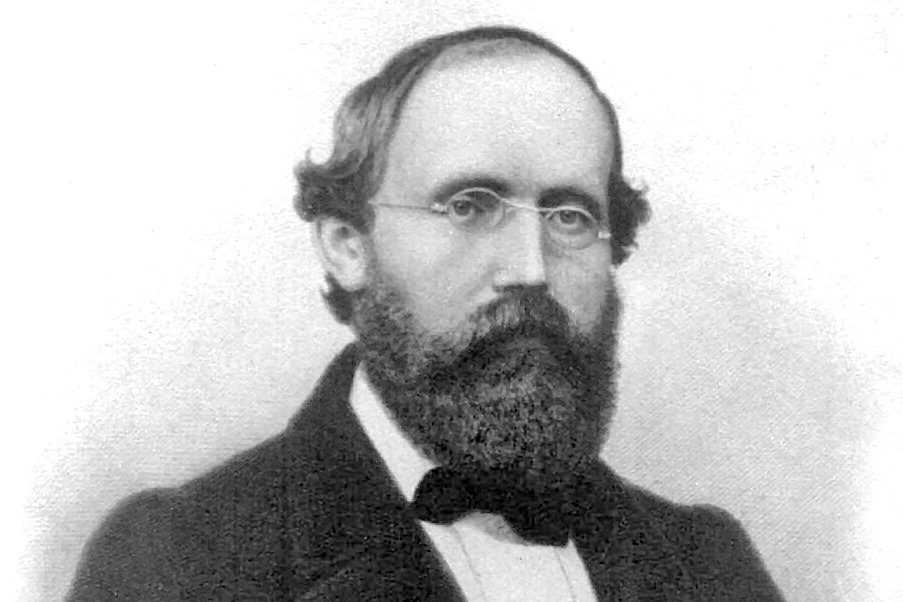
Levent Alpöge, a mathematician who works at the AI company Anthropic, says he and the company's Claude AI model have proved the Riemann hypothesis, a problem first posed in 1859 that Scientific American called the most famous in all of math, The Washington Post and Scientific American reported on Nov. 20.
The claim involves Lean, software that checks each step of a proof by computer, according to The Next Web and Nacionale. Mathematicians still need to review the work before it can be accepted.
Scientific American reported in a follow-up that independent mathematicians who looked at the work said the proof is almost certainly true. Other outlets, including Nacionale, stressed that the result has not yet been verified.
NPR and Al Jazeera also reported the claim on Nov. 21, framing it as a claim that awaits expert review. News Unc will report on the outcome of that review.
Sources
- The Washington Post, Using Anthropic AI, mathematician claims to have solved Riemann hypothesis (Nov. 20)
- Scientific American, Anthropic mathematician claims to prove Riemann hypothesis, most famous problem in all of math
- Scientific American, The AI Riemann hypothesis proof is almost certainly true, independent mathematicians attest
- The Next Web, Anthropic mathematician says he and Claude proved the Riemann hypothesis
- Phys.org, Anthropic researcher says he and Claude proved the Riemann hypothesis, first posed in 1859
- Nacionale, Has the Riemann hypothesis been proved? An Anthropic mathematician says yes, but it is not verified yet
- Al Jazeera, Riemann hypothesis: Has the world's most famous maths problem been cracked? (Nov. 21)
- NPR, Anthropic worker claims to have solved a Holy Grail of math problems with the help of AI (Nov. 21)