NASA Locks In the Design of Its Nuclear-Powered Mars Spacecraft
SR-1 Freedom, targeted for launch in late 2028, would be the first spacecraft to fly nuclear electric propulsion in deep space.
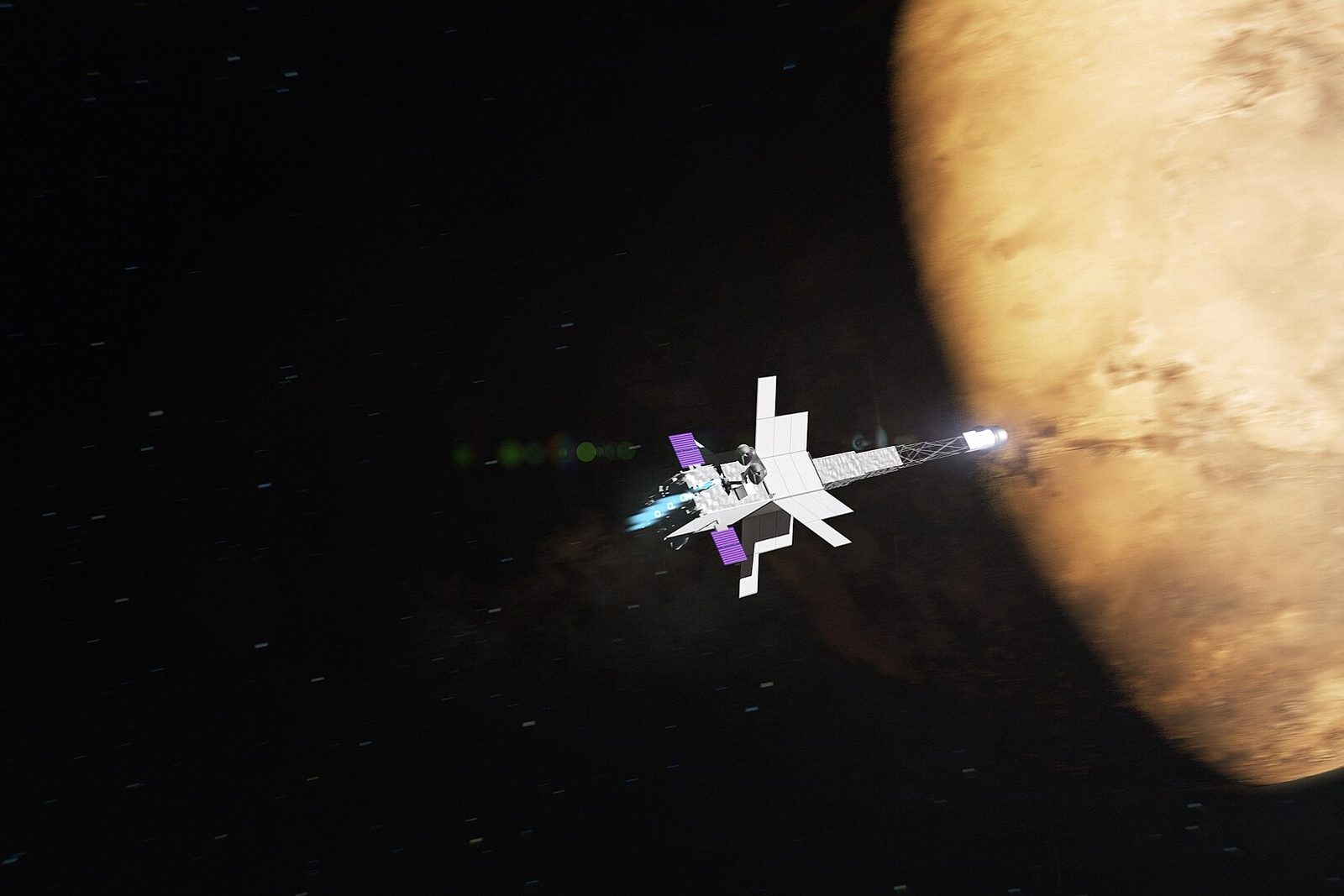
NASA said Tuesday, Nov. 24, that it has completed a major design review for Space Reactor-1 Freedom, a spacecraft meant to demonstrate nuclear electric propulsion in deep space for the first time. The review was held in October at NASA's Glenn Research Center in Cleveland with the Department of Energy and industry partners. Launch is targeted for late 2028.
SR-1 will carry SkyFall, a capsule holding three helicopters, to Mars, where they are to study the planet's geology and climate history and look for signs of ice below the surface. The review settled on a shorter boom than early illustrations showed and larger X-band antenna dishes for communications. NASA is still weighing the number of radiator panels, the power output of the nuclear module and how long the reactor will run.
NASA also awarded a $39.3 million contract to the Johns Hopkins University Applied Physics Laboratory, working with Advanced Cooling Technologies, to develop the system that sheds heat from the nuclear power module.
Under the plan NASA described, the reactor switches on after the spacecraft leaves Earth orbit, runs for an initial period and shuts down; solar arrays then power the cruise to Mars, and the reactor restarts after SkyFall is delivered to Mars orbit. "SR-1 marks a pivotal step in how we travel through the solar system," said Steve Sinacore, the program's director. NASA Administrator Jared Isaacman introduced the concept in March.
Sources